

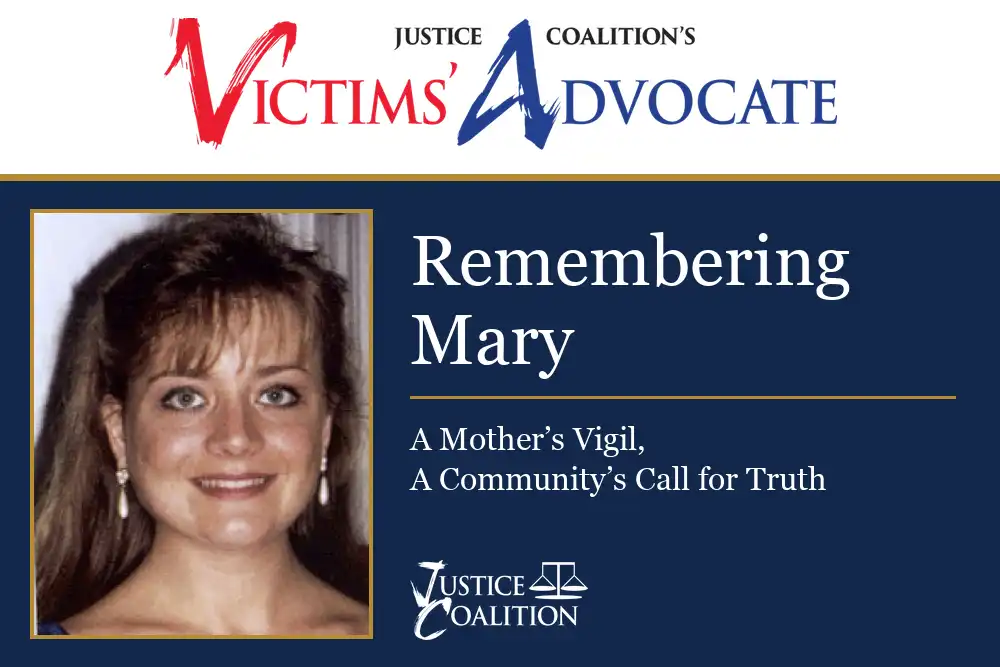
In the quiet hours of a Jacksonville neighborhood, a mother’s life radiated through her work, her faith, and the love she poured into two children. Mary Futrill Petersen was that beacon: a Christian, college-educated professional who rose to a leadership role at Brooks Rehabilitation, earning every bit of success on her own merit. Her journey, bright, purposeful, and deeply loving, was suddenly cut short on May 28, 2002, in her Fort Caroline home, leaving a family and a community forever seeking answers.
Mary was a daughter who cherished her parents, a devoted mother to two children, and a colleague who poured energy into her work. Friends and coworkers describe her as bubbly, generous, and unfailingly kind, someone who could brighten a room simply by being herself. Her mother, Fran Futrill, recalls Mary as someone who insisted on handling money responsibly from an early age, a trait that blossomed into a lifelong ethic of stewardship and care. Mary balanced demanding professional responsibilities with the joys and challenges of motherhood, often coordinating dance lessons and baseball practices around her role at Brooks Rehabilitation. She was in the midst of finalizing a divorce from Donald Petersen when she was found dead, an event that shattered the sense of safety she had built for her children.
The night of May 25, 2002, had been celebratory in its own quiet way: a pony-themed birthday party for Mary’s daughter, a moment of light before the world shifted. On the morning of May 28, the family’s life was forever altered when Mary was found deceased in her Fort Caroline home. The autopsy determined asphyxiation by strangulation; there were no signs of forced entry, and her vehicle was found nearby. The trail to truth, however, remained elusive. How had the killer entered a home with childproof locks in place? Why did this brutal crime strike Mary at a moment when she was redefining her life for herself and her children? The questions remained, haunting investigators and Mary’s family alike.
As years passed, Mary’s case saw intermittent bursts of renewed attention. In 2005, investigators reopened the file after retesting potential evidence, but as is so often the case with unsolved crimes, answers did not come. The pain of loss continued to shape the lives of those Mary left behind, frankly and tenderly, with a stubborn insistence on justice. Donnie Petersen, Mary’s son, grew older, moving away from Jacksonville, while Mary’s daughter, Rachel, carried forward in life with the memories of a mother who gave everything to her children. The trauma of Mary’s death became a living force that shaped Fran’s work for years to come.
Fran Futrill did not simply endure; with the full support of her husband, Bill, her rock, and the community, she built a legacy for Mary. She stepped into Jacksonville’s victim advocacy scene with a fierce combination of faith, grit, and compassion. A tireless volunteer of the Justice Coalition, she helped organize neighbors and families, and she and Bill carried the weight of Mary’s death into community centers, courtrooms, and support meetings. She helped connect families to resources and offered a steady presence in the face of grief that never fully subsides. “News will cover new cases,” Fran once said, “but we were blessed with 24 years of coverage for Mary. People tell us, ‘It’s time you got over it.’ How do you get over the death of your child? It’s with us 24/7; it never leaves us.”
Over time, Fran’s role evolved. She stepped back from frontline advocacy by the time she reached her late seventies. She still maintains connections with those who had helped in Mary’s case, even as colleagues retired or moved on. Her faith remains a pillar, offering a lens of hope amid sorrow. “God makes a way when there seems to be no way,” Fran would say, a creed that sustained her as she watched Mary’s story unfold in the pages of local news and in the quiet corners of courtroom halls.
Mary’s life, meanwhile, continued to be measured not in tragedy alone but in the light she cast on others. In Jacksonville, colleagues remembered a woman who led with integrity, who valued her team, and who strove to provide the best care possible for every patient who walked through Brooks Rehabilitation’s doors. Her leadership was not merely about climbing a corporate ladder; it was about creating a culture of care, where employees felt supported and clients received compassionate, quality service. The two children who were Mary’s greatest joy, Donnie and Rachel, grew up with photographs and stories of a mother who loved them fiercely, a mother who taught them to be responsible, kind, and brave.
Over the years, the question of who ended Mary’s life remained unanswered, fueling a relentless pursuit of justice not only by investigators but by a broader community that refused to let her memory fade. The case’s open status did not shake Fran’s resolve; if anything, it intensified her commitment to ensure that Mary’s voice, and the voices of families like hers, continued to be heard. The Justice Coalition’s work serves as a beacon in Mary’s death, guiding others toward healing, accountability, and truth-telling.
Today, Mary Futrill Petersen’s case stands as a testament to resilience: a mother’s unwavering faith, a daughter’s enduring love, and a community’s steadfast devotion to justice. Though the killer remains free, the memory of Mary’s warmth, generosity, and leadership endures in the lives she touched. Fran, at 79, remains a living reminder that justice is a promise kept through perseverance, faith, and solidarity. The light Mary carried, through her work, her faith, and her family, continues to guide those who seek truth, resilience, and healing.
Read the complete April 2026 edition of the Victims’ Advocate (PDF)